
WIPO

Libraries, WIPO

How Access Provisions Grow Readers and Book Sales

Digitization projects, public libraries, and broader access to literary materials help create copyright markets. Together, these access infrastructures build the literate public and long‑run demand that copyright ultimately depends on. In 2016, the Delhi High Court was asked whether photocopied course packs for university students unlawfully undercut the market for academic books. The Court’s decision ruled in favor of the course packs, in part by finding that “by producing more citizens with greater literacy skills and earning potential, in the long run, improved education expands the market for copyrighted materials.”[1] This note surveys the evidence that supports the court’s finding.[2] First, studies show that digitization projects, such as Google Books, which make works easily searchable and partially readable online, can increase, rather than depress, print sales. Second, scholarship shows that access through public libraries and free lending only modestly displaces the bestseller margin with little measurable impact for the long tail of titles. Third, by examining scholarly culture in households along with policy syntheses on school libraries, studies explain how early and repeated access to books during formative years builds durable reading habits, longer educational trajectories, and the kinds of literate text‑using adults on whom creative and academic markets ultimately depend. Taken together, these strands do not prove the Delhi High Court’s dictum in a single econometric stroke, but they offer a coherent anecdotal scaffolding for its core intuition that investments in access and education can expand, rather than extinguish, the market for copyrighted works. Google Books Digitization and Print Book Sales The Google Books case offers a natural experiment on whether free digital access necessarily cannibalizes print sales. When the project was launched, publishers argued that searchable, partially readable copies online would undermine the market for physical books.[3] They litigated this claim to the U.S. Supreme Court, which ultimately held that Google’s secondary use was protected by fair use.[4] In 2023, two economists revisited the publishers’ anxieties by exploiting the way Harvard’s Widener Library contributed its pre‑1923, out‑of‑copyright holdings to Google Books. Volumes were scanned in shelf order between 2005 and 2009, rather than by demand or popularity, so the timing of digitization for any particular title was effectively arbitrary. The authors track 37,743 of these titles and compare their print sales in the two years before the main scanning period (2003–04) with sales in the two years after (2010–11), asking whether books that happened to be digitized followed a different path from otherwise similar books that were not. Because digitized titles are fully text‑searchable and viewable online, they function as discovery tools. Readers can find them via keyword search, skim a few pages, and then decide whether to purchase a physical copy.[5] Their results show that digitization can expand, rather than erode, the market for many books. Roughly 40% of digitized titles see an increase in print sales over the study period, compared with fewer than 20% of titles that were never scanned, and on average being searchable and readable on Google Books is associated with an increase in physical sales of up to about 8%. The effect is most pronounced for relatively obscure works in the long tail, not for the handful of titles that already sell well. The authors also find a spillover. Once readers discover a digitized work by a given author, they become more likely to buy that author’s other, non‑digitized titles. Taken together, the findings suggest that large‑scale digitization and free online discovery can serve as an access infrastructure that helps surface neglected works and stimulates demand across an author’s catalogue, complicating simple claims that free digital access must be bad for print markets. Effect of free access through libraries on print sales In 2022, a study of the Japanese public library systems showed that free access through public libraries modestly displaces sales only for bestsellers and has a minimal detectable effect for most other books. Kanazawa and Kawaguchi analyze Japan’s dense public library network by building a title‑municipality‑month panel that links, for each book, how many copies local libraries hold to how many copies nearby bookstores sell over time. Their empirical strategy controls for fixed differences across titles and municipalities, for the typical life‑cycle of sales after publication, and for municipality‑month shocks, so that the remaining effect can be interpreted as the impact of additional library copies on local retail demand. Within this framework, they find that library holdings substitute for purchases at the very top of the demand distribution, but not elsewhere.[6] For the most popular sixth of titles, each additional library copy reduces monthly bookstore sales in the municipality by about 0.24 copies, and for bestsellers the estimated displacement rises to roughly 0.52 copies per month. By contrast, for the majority of less popular titles, the estimated effects are statistically indistinguishable from zero. Adding library copies does not measurably change local sales. Across robustness checks, this pattern holds, suggesting that in a highly literate, library‑rich country like Japan, public libraries have a small amount of demand for already successful books but do not “destroy” the long tail of the market. As an access infrastructure, then, they provide broad reading opportunities while leaving most of the book market intact. How Early Access to Books Builds Lasting Reading Habits Household scholarly culture and school‑library studies show that early, repeated access to books helps build the readers on whom later creative and academic markets depend. In their cross‑national work on 27 countries and later across 31 societies, Evans, Kelley, Sikora, and Treiman find that growing up in a book‑rich home is strongly associated with more years of schooling and higher occupational status, even after controlling for parents’ education, class, and occupation.[7] On average, children from homes with a substantial number of books complete about three more years of education than those from bookless homes, and the size of this effect is comparable to having university‑educated rather than unschooled parents. A follow‑up study shows that home library size also predicts entry into higher‑status, more knowledge‑intensive jobs, mostly because it channels children into longer


WIPO

New WIPO Guide Casts Doubt on Open General Exceptions

WIPO’s new Guide to the Copyright and Related Rights Treaties Administered by WIPO (2nd ed.) contains some complicated messages on the use of open general exceptions, like fair use and fair dealing. Open General Exceptions in Copyright Others and I have described open general (OG) exceptions as open in the sense of applying to potentially any use of any work by any user for any purpose, subject to a proportionality test (such as “fair practice,” “dealing” or “use”) that balances the interests of the rights holder with those of the user and the public (see User Rights Database). The U.S. fair use provision is frequently cited as the primary model of an open general exception. But many “fair dealing” exceptions are also open (e.g., Malaysia), as are many specific exceptions such as for “research” that exist in many civil law countries and can be applied quite flexibly. OG Exceptions and the Three-Step Test There is a long-running debate in international copyright law and policy about whether fair use and other open general exceptions violate the so-called three-step test in the Berne Convention, and replicated in subtly different forms in other copyright treaties. The Berne version of the three-step test provides: It shall be a matter for legislation in the countries of the Union to permit the reproduction of such works in certain special cases, provided that such reproduction does not conflict with a normal exploitation of the work and does not unreasonably prejudice the legitimate interests of the author. The US Copyright Act provides an exception “the fair use of a copyrighted work … for purposes such as criticism, comment, news reporting, teaching (including multiple copies for classroom use), scholarship, or research,” provided the use is “fair” considering the purpose and character of the use, the nature of the copyrighted work, the amount and substantiality of use, and the effect of the use upon the potential market for or value of the copyrighted work. The debate about whether fair use complies with the three-step test revolves around the inclusion of the opening term “such as” before the listed permissive purposes for a use. The legal question in the three-step analysis is whether that opening clause renders the exception applicable to uses beyond “certain special cases.” The New Guide’s Approach The new WIPO Guide begins with a refutation of the old idea, perhaps first published in a WIPO document by a report authored by Sam Ricketson early in the SCCR’s work on limitations and exceptions, that the US fair use exception is in violation of the Berne three-step test because its application to purposes “such as” the listed purposes is not adequately confined to “certain special cases.” Ricketson (2003, p.67) had concluded that “it is unlikely that the indeterminate ‘other purposes’ that are covered by Section 107 meet the requirements of the first step of the three-step test”. The report concludes differently, explaining: BC-9.25. With this interpretation of the adjective “certain”, it is easier to reject the assertion that the US “fair use” doctrine and practice may not be in accordance with the three-step test. The basis of this assertion is that the U.S. Copyright Act does not fulfill the condition of “certainty”, since it does not contain a sufficiently clear definition as required by the above-mentioned interpretation of the WTO panel. Such doubts about the US law, however, are not justified even on the basis of the interpretation adopted by the WTO copyright panel, because they would be based on an overemphasis of an isolated element of the panel’s finding: the requirement of “certainty”. As quoted above, even the panel has clarified that “there is no need to identify explicitly each and every possible situation to which the exception could apply But the report then goes on to suggest that US law only became sufficiently “certain” at some point during its development in case law: BC-9.65. It is to be recognized, however, that these open forms of limitations or exceptions rather than specific targeted provisions in the statutory law may only be an appropriate option if they are based on well-established court practice. For example, in the United States, the “fair use” system is the result of two centuries of development of case law. Simply copying the statutory codification of the voluminous case law on fair use in section 107 of the U.S. Copyright Act into the legislation of another country where such a system has not existed before and trying to settle the questions of limitations and exceptions on that basis might lead to conflicts with the Berne Convention. The idea that open general exceptions may violate the three-step test has been rigorously contested by international copyright scholars. For example, Geiger et al (2013, pp.1-2) conclude, in a rich historical and doctrinal examination, “that the three-step test in international copyright law does not preclude flexible national legislation allowing the courts to identify individual use privileges case-by-case and that the three-step test can serve as a source of inspiration for national law makers seeking to institute flexible exceptions and limitations at the domestic level.” The compliance of general exceptions with the three-step test was strongly supported by the Marrakesh Treaty’s Article 10(3), which permits countries to implement it “through limitations or exceptions specifically for the benefit of beneficiary persons, other limitations or exceptions, or a combination thereof,” which “may include judicial, administrative or regulatory determinations for the benefit of beneficiary persons as to fair practices, dealings or uses”. But the Report concludes that such general exceptions “might only be an appropriate option if there is well-established court practice based on adequately developed criteria.” For example, in the United States, the fair use system is the result of two centuries’ development of case law. A simple copying of the statutory codification of that voluminous and still developing case law of fair use in section 107 of the U.S. Copyright Act – and then trying to settle the questions of limitations and exceptions on that basis in a country without similar

Traditional Knowledge, WIPO

WIPO IGC seeks progress on Traditional Knowledge, Cultural Expressions

“The oceans that sustain our islands, the stars that guide our ancestors across the Pacific, the songs, the weaving, the navigational charts etched into memories across generations, all of these are more than heritage. They are the living expressions of who we are as a people. We negotiate here on their behalf, and we remain committed that they are protected,” the representative of the Marshall Islands on behalf of all Pacific Island States stated at the closing session of the World Intellectual Property Organization’s (WIPO) Intergovernmental Committee on Intellectual Property, Genetic Resources, Traditional Knowledge and Traditional Cultural Expressions (the “IGC”), which took place from from 4 to 13 March 2026, in Geneva, Switzerland. This neatly summed up what is at stake for many negotiators at this meeting. In May of 2024, WIPO succeeded in finalising a treaty on intellectual property, genetic resources and associated traditional knowledge after nearly 25 years of negotiation. The treaty, however, will only go into force once 15 Member States have ratified it; to-date only 3 have done so. In the meantime, the IGC is tasked with continuing to progress its work on “the protection of genetic resources (GRs), traditional knowledge (TK) and traditional cultural expressions (TCEs), with the objective of finalizing an agreement on an international legal instrument(s), without prejudging the nature of outcome(s), relating to intellectual property, which will ensure the balanced and effective protection of TK and TCEs.” This is a significant task at WIPO, as it mandates member states to engage with text on another legal instrument: one that China expressed hope at the opening plenary would not take another 25 years to negotiate. Whether that hope will translate into concrete results is difficult to say; the committee spent much of the week in informal discussions with few major decisions other than to continue text-based discussions on the working documentsWIPO/GRTKF/IC/51/4 (The Protection of Traditional Knowledge: Draft Articles) and WIPO/GRTKF/IC/51/5 (The Protection of Traditional Cultural Expressions: Draft Articles), as well as any other contributions of Member States. One Member State contribution that sparked some discussion was a proposal from the United States and Japan that WIPO disseminate a questionnaire surveying national legislation in WIPO Member States for the sui generis protection of TK and TCEs (see WIPO/GRTKF/IC/52/6), arguing that this would support evidence-based negotiations. Others were concerned such a survey could act to delay meaningful progress towards a workable legal instrument text, which is the IGC’s primary mandate. Some, such as the Africa Group, raised concerns about how such surveys would be financed, what methodology would be used, and on what timeline work could be completed, and reminded delegates that the Committee is tasked “narrow existing gaps instead of adding more work.” The Committee decided that this item would remain on its agenda for further discussion. Also a topic of discussion was the full and meaningful participation of Indigenous peoples in the WIPO meeting, with Tulalip Tribes on behalf of the Indigenous Caucus noting that the voluntary fund which supports their participation was depleted and calling on WIPO to use its core budget to support Indigenous participation. At the launch of the Geneva Knowledge Center law professor Valmaine Toki noted that WIPO has a “flawed process” for Indigenous participation, as these communities who are the owners and stewards of TK and TCEs are not member states and cannot therefore make direct text suggestions. The March 2026 meeting of the IGC also marks the first time the committee has been chaired by an Indigenous person: Laine Fisher of New Zealand, a member of the Māori people. The IGC is taking place in the context of several other multilateral discussions on access and benefit-sharing regimes, including down the street at the World Health Organization (which is discussing pathogen access and benefit-sharing in the context of pandemic preparedness); within the Convention on Biological Diversity Cali Fund, meant to protect biodiversity through an exchange of financing for access to digital sequence information on genetic resources; and the Biodiversity Beyond National Jurisdiction (BBNJ) treaty which is seeking access and benefit sharing for sustainable use of deep sea resources. Final observations The program for IGC 52 was not finalized in time to be circulated in advance of the session. As a result, Member States were not in a position to prepare adequately prior to the meeting. Several delegations therefore requested that, for the next session of the Committee in September, the program be circulated well in advance to facilitate proper preparation. The mandate for the 2026–2027 budgetary biennium provides that activities should not replace the time allocated for substantive negotiations on Traditional Knowledge (TK) and Traditional Cultural Expressions (TCEs), as well as discussions on Genetic Resources (GRs). During IGC 52, in addition to the Indigenous panel, two days were devoted to information-sharing sessions, which were not considered part of the substantive or text-based negotiations. Some delegations therefore noted the importance of ensuring that such activities do not reduce the time available for substantive negotiations, in line with the mandate. Decisions of the committee are here.

Design Law Treaty, WIPO

Should WIPO Harmonize Design Protection for Graphical User Interfaces?

The United States and others have proposed that the World Intellectual Property Organization’s Standing Committee on the Law of Trademarks adopt a Joint Recommendation on Industrial Design Protection for Designs for Graphical User Interfaces. The core of the instrument would recommend “that Member States provide industrial design protection in relation to new or original designs for a graphical user interface (GUI),” and “that the acts considered by a Member State to infringe industrial design rights for a design for a GUI are the same as those considered to infringe industrial design rights for other products.” In considering this proposal, it is important for countries to consider the criticisms of using design law to protect GUIs. The core criticisms of using design law to project GUIs include that GUIs are functional, not merely aesthetic; that using design protection rather than copyright evades the limitations of copyright law that favors competition; that design protection favors larger companies and could reduce innovation by raising barriers to entry.  As the proposal notes, GUIs, such as the icon designs on screens of various kinds, are increasingly ubiquitous in many mobile technologies from smartphones to the navigation screens in cars. Where GUIs contain sufficient originality, they may be subject to copyright protection. But some countries, including the US, also make GUIs eligible for design protection, with important ramifications.  Flexibility in the RDLT The recently adopted Riyadh Design Law Treaty permits, but does not require, countries to extend design law protection to graphical user interfaces. Article 2(1) of the DLT establishes that “[n]othing in this Treaty or the Regulations is intended to be construed as prescribing anything that would limit the freedom of a Contracting Party to prescribe such requirements of the applicable substantive law relating to industrial designs as it desires”. It does not define what constitutes an “industrial design,” nor does it limit the categories of designs that a Contracting Party may choose to protect. Consequently, a national decision to extend protection to virtual, animated, or non-physically embodied designs falls within the substantive autonomy expressly preserved by Article 2(1). Functional Designs? There is a threshold conceptual problem with applying design law to GUIs. Design law is intended to protect ornamental or aesthetic features, not functionality. Critics point out that in GUI design, aesthetics and function are often inseparable. If a layout is the most efficient way to achieve a task, granting protection could stifle innovation by preventing others from using effective user experience patterns. While design patents are intended to protect only “ornamental” (non-functional) appearances, user interfaces inherently incorporate significant functional elements, leading to a system where designers may gain a “functional equivalent” of a utility patent through the design patent system. Evading Copyright Limitations  Expanding design protection to GUIs may allow applicants to evade the inherent limits of copyright law. These include the requirement for originality (not mere functionality) in the expression to gain protection, the requirement to prove copying to establish infringement, and the ability of an accused infringer to assert limitations and exceptions as a defense. In the US, scholars have criticized the granting of design patents that fail to meet the minimal originality required for copyright.  Competitive Effects Applying design law to GUIs may dampen competition in technology markets. Shared conventions – like using similar icons for similar functions — increase interoperability and the ability to compete. Creators of competing products using GUIs often need to use similar icons to ensure usability for consumers. Examples include the gear symbol for settings, or the trash can icon for deletion. Some GUI designs are so constrained by usability, convention, technical architecture, and user expectations that they leave competitors with no meaningful alternative designs that are equally usable. Granting design protection for such elements — requiring their licensing by potential competitors — can lead to a reduced ability to create competing products in local markets.  Distributional Effects The distributional effects of GUI design protection are highly asymmetric: under current systems, design rights are used predominantly by large corporations from industrialized economies rather than by local designers in most countries. Leading filers such as Samsung Electronics, Philips, and LG Corporation illustrate how firms with substantial internal legal capacity and global market strategies are best positioned to deploy GUI design protection aggressively, reinforcing existing technological and economic concentration rather than fostering local innovation.

Artificial Intelligence, WIPO

WIPO Launches Artificial Intelligence Infrastructure Interchange

WIPO launched its Artificial Intelligence Infrastructure Interchange (AIII) on March 17, which was described as having the goal of supporting the development of AI technology that supports the livelihoods of creators and innovators. The goal has two aspects – making AI tools available to creators to help their work, while at the same time assuring that the works used to create such tools support the moral and material rights of authors.  The key focus is on “infrastructure” that can technically identify AI creations and promote models for creators to use AI as a tool. Assistant Director General Ken Natsume explained that “the answer lies in various tools: Watermarks, metadata, digital ID, authentication tools, digital distribution frameworks.” The AIII’s launch page similarly defines the “IP infrastructure” of its focus as composed of “watermarks, authentication tools, standards, metadata, digital identifiers, rights management and content recognition systems, and digital distribution frameworks … developed by rightsholders and creators to build new business models that safeguard their rights.”  This definition of AI infrastructure is quite different than the broader sense embraced by Public AI advocates. That approach proposes “treating AI as public infrastructure, emphasising democratic governance, broad accessibility, and accountability to the communities that AI systems serve.” The concept of “Just AI” used by the Centre on Knowledge Governance and others is largely congruent with the goals of Public AI, but also raises additional human rights concerns, including the moral and material interests of creators. In this sense, the WIPO AIII focus on tools to enable remuneration and creator opt outs in AI Tools can be seen as promoting some but not all aspects of a Just AI vision.  At the launch event, participants described the goal of AIII as providing a neutral forum for creators, rights holders, developers, and experts to share information on the development and use of such tools, including tools that can be used in the creation process. Music and voice or actor simulation models are a core focus of the project. These are areas where AI tools have the potential to create content that competes with the works used to train them. In such areas, the justification for using highly licensed tools and giving creators maximum ability to opt out of their content being used in training is at its apex.    The WIPO project has created a “Technical exchange network (TEN)” where technical experts from the private sector, including academics and civil society, will share information on the development and use of content identification tools. There will also be an annual public meeting of the project and a government expert group that will share information with policy makers about such infrastructure and exchange on national developments.

WIPO

Following upcoming WIPO Committees? Here’s what you need to know.

The World Intellectual Property Organization has several important committees meeting in the upcoming months. Below are the Centre on Knowledge Governance guides for each of these meetings: key context and background, next meeting dates, draft agendas and key issues to be considered, providing a structured overview of ongoing discussions across different areas of intellectual property. IGC (Intergovernmental Committee on Intellectual Property and Genetic Resources, Traditional Knowledge and Folklore) The IGC continues to work towards international legal instrument(s) ensuring balanced and effective protection of genetic resources (GRs), traditional knowledge (TK) and traditional cultural expressions (TCEs), following the adoption of the WIPO Treaty on Intellectual Property, Genetic Resources and Associated Traditional Knowledge (GRATK treaty). Current discussions remain centered on addressing the misappropriation of TK and TCEs through the IP system, and the recognition of rights grounded in customary law of Indigenous Peoples and Local Communities (IPLCs). Additional issues include the creation of new or adapted IP protection mechanisms of a collective nature, possible disclosure requirements in patent applications, and the degree of flexibility and policy space for national implementation versus minimum binding standards.  Full report here. ACE (Advisory Committee on Enforcement) Key issues include the exchange of national experiences on public campaigns aimed at fostering respect for IP, consideration of national policies and enforcement mechanisms, and presentation of training programs supported by WIPO. Discussions also address legislative assistance, avoidance of misuse of enforcement procedures, experiences related to physical and digital forms of infringement, challenges faced by SMEs, application of AI tools, and collaborative approaches and information-sharing practices, alongside discussions related to biopiracy and the impact of intellectual property infringement in the biotechnology sector. Full report here. SCT (Standing Committee on the Law of Trademarks, Industrial Designs and Geographical Indications) Current discussions address trademark protection, including country names and geographical names of national significance in the domain name system, as well as industrial designs, including graphical user interfaces, icons and typefaces, and their potential impact on innovation. In the field of geographical indications, discussions consider developments related to existing systems and broader implications such as sustainability and rural development, while emerging digital issues include information sessions on trademarks in the metaverse and NFTs. Full report here. SCP (Standing Committee on the Law of Patents) Key issues include exceptions and limitations to patent rights, covering experimental use, prior use, regulatory approval, exhaustion of rights, and additional exceptions related to farmers, breeders and private and non-commercial use. Discussions on the quality of patents address patentability criteria, opposition systems and examination practices, including artificial intelligence, while patents and health discussions focus on patent information and flexibilities in facilitating access to medicines and related technologies. Additional topics include confidentiality of communications, transfer of technology and differing views on patent harmonization. Full report here CDIP (Committee on Development and Intellectual Property) Recent discussions include a project on the use of intellectual property to support sports development and proposals addressing cross-border counterfeit trade, cultural expression and climate resilience, raising questions related to flexibilities, safeguards and alignment with the Committee’s mandate. Broader discussions reflect divergences regarding the scope of the Committee’s work, including traditional knowledge, climate and cultural industries. Full report here. SCCR (Standing Committee on Copyright and Related Rights) Key issues include ongoing discussions on a potential broadcasting treaty, limitations and exceptions with differing views on possible international instruments, and proposals related to copyright in the digital environment, including artificial intelligence and remuneration for digital uses. Discussions also address the relationship between copyright and AI training, including permitted uses, the role of exceptions and conditions under which remuneration may be required. Full report here.

Blog, WIPO

ACE: Background, next meeting and key issues to be considered

ADVISORY COMMITTEE ON ENFORCEMENT (ACE) Background The Advisory Committee on Enforcement (ACE) was established by the WIPO General Assemblies in 2002 with a mandate focused on technical assistance and coordination in the field of intellectual property enforcement. Its mandate expressly excludes norm-setting activities. The Committee’s work centers on cooperation with public and private actors, the exchange of information, the promotion of awareness, and the organization of training activities at national and regional levels. “Within the framework of recommendation 45 of the WIPO Development Agenda, the ACE focuses on: coordinating with public and private organizations to combat counterfeiting and piracy; public education; assistance; coordination to undertake national and regional training programs for all relevant stakeholders and; exchange of information on enforcement issues.”  Next meeting (Eighteenth session) Date: June 2 to June 4, 2026 Website: https://www.wipo.int/meetings/en/details.jsp?meeting_id=90608  Draft Agenda (WIPO/ACE/18/1 PROV.) Key Issues The ACE agenda includes issues such as the following:  References:

Blog, WIPO

Time for an IP Reset for Health, Education, Creativity and TK?

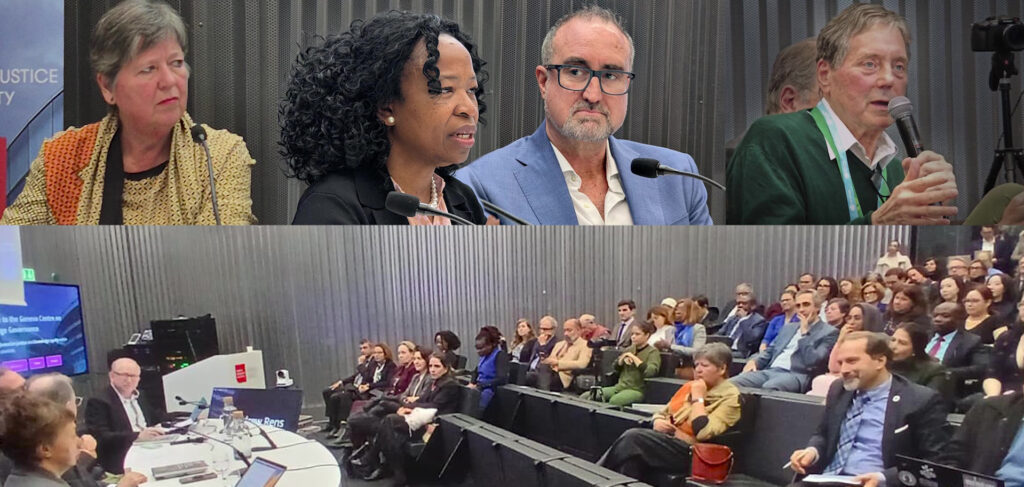
It’s time to put people back into the Intellectual Property system. Currently IP tends to reproduce inequality. IP should support public goods such as health and education. We need to address substitution of creators and markets by AI and we should promote solutions like Public AI to protect research and cultural diversity. The profits earned through the monopoly power of IP should be ‘de-linked’ from the incentive to invest in R&D or creativity, especially in health. Most of all, we need accountability back in the system. These were a few of the recommendations offered by a high-level panel of international professors, top government representatives and practitioners at the recent launch of the Centre on Knowledge Governance at the Geneva Graduate Institute on 3 Dec 2025. The discussion covered many of the topical issues currently being negotiated at the World Intellectual Property Organization (WIPO) and the World Health Organisation (WHO). Disclosure of Traditional Knowledge Former WIPO senior director Wend Wendland talked about his new book which details the long journey to adopt a Treaty on Genetic Resources and Associated Traditional Knowledge (TK), finally passed in 2024 and which requires the disclosure of TK in patent applications, a rare win for marginalised people in the formal IP system. Valmaine Toki, a Maori rights advocate, praised the treaty but said it will remain an imperfect victory until indigenous people have a full seat at the table in fora like WIPO to ensure full benefit sharing in the exploitation of their knowledge.  Remuneration Guilherme Patriota, Brazil’s Ambassador to the WTO said that creativity and innovation, especially in the age of AI, should not be a ‘winner takes all’ scenario skewed towards the interests of large corporations.  The creator of Brazil has a huge music industry, very popular, also very valuable in many ways like many other countries of the South. Actually, it’s kind of a wealth of the South. Nigeria has a huge film and music industry as you do in South Africa. What’s going to happen to that? Is that all going to be fed for free into systems for large language models and AI and they will start to replicate similar types of music? I think individuals should have the rights of remuneration for their individual work and contribution. So that’s what we’re looking for. Make it more human, make the system more human. Harvard Law Professor Ruth Okediji argued that the failure to reward creators is a problem throughout the IP system: The innovators behind the COVID-19 vaccine are not the ones getting the royalties. The employees in the big intermediaries are not the ones getting the remuneration. It’s not just indigenous communities. It’s not just women. It’s not just small and medium enterprises. The entire ecosystem is structured around private arrangements that make equitable dissemination [of benefits] difficult… AI is bringing us to this moment of confrontation in more explicit ways. Let’s remember that it’s not just the scraping of music or the scraping of data. There are labourers in developing countries who are painstakingly, for very little money, involved in this [production of AI models]. There are environmental costs of these large language models and those costs will be borne disproportionately.  So I think to echo something Ambassador Patriota said, this [inequality] is in the DNA of the system. Access to Medicines Participants also talked about the impact of IP monopolies on access, especially to public goods. Leading health advocate Ellen ‘t Hoen expressed disappointment that the IP lessons learnt by the Access to Medicines movement which fought successfully for affordable AIDS medicines in the 1990s were not applied during the Covid19 pandemic.  The vaccines, the COVID-19 vaccines were largely developed with fast, vast amounts of public financing. …That’s exactly what you want. If a crisis hits like that, you want governments to act and spend money in order to solve it. But what they failed to do was attach conditions to that financing. Those conditions could have, for example, been licensing  know-how through the Coronavirus Treatment Acceleration Program (CTAP) or the Medicines Patent Pool. That did not happen. So the IP was quite strong, and the companies at the end of the day became the ones who decided where the vaccines would go, and the vaccines went to the highest bidders. There is the famous case of Canada buying three times the size of its population, while about five people were vaccinated in sub-Saharan Africa.  James Love of Knowledge Ecology International added the problem of global scale: I think we have to really think hard about how you produce works, produce inventions, produce products as public goods in a world where markets are global. They’re not just national. Governments can sort of do public goods at the national level. They have really been bad at doing it at the global level. And I think that proposals like the idea of de-linking the incentive for drug development from the price of the drug, or the idea of a WTO agreement on the supply of public goods, those things are really, really important today. Limitations and Exceptions Ruth Okediji described Limitations and Exceptions to Copyright in a similar vein: There are public goods for which limitations and exceptions are critical. Education would be an example. Every country needs limitations and exceptions that address what happens in the classroom. So I’d say limitations and exceptions for education are super important. We have limitations, for example, for innovation purposes, reverse engineering, decompilations, when it comes to software. This is important in order to both promote interoperability but also to understand what’s behind the hood when you’re looking at a particular technical invention. So I think identifying the category of limitations and exceptions is important and then discerning whether that is a category that at the multilateral level can facilitate consensus because it is the kind of knowledge good for which all countries have a common concern. Archivists are another example. The role of libraries, another example.  Okediji went on to characterise

Blog, WIPO, WIPO-SCCR

WIPO SCCR 47 Ends with Some Progress After Another Late Night

The World Intellectual Property Organization’s Standing Committee on Copyright and Related Rights negotiated its conclusions into the early morning hours of December 6 over the conclusions on a packed agenda. The meeting agreed to identify a series of specific articles of the Treaty on the Protection of Broadcast Organizations that lack consensus, to delay until next meeting the decision on how to begin text based negotiations on three proposals for work on an instrument on limitations and exceptions, and to begin work on studies of remuneration of audiovisual authors and on copyright and training of artificial intelligence tools. This note describes the major conclusions and positions of member states at the meeting. Below we also publish an edited transcript of the SCCR 47 public sessions.  Treaty for the Protection of Broadcast Organizations The Chair released a new draft Treaty for the Protection of Broadcasting Organizations with minor changes from the previous draft. After many sessions of the SCCR when it appeared that a conclusion of the broadcast Treaty might be near, this round ended with conclusion that many of the draft treaty’s provisions are far from reaching consensus. The Chair’s summary, in a break with those of the recent past, contained a detailed discussion of divergences that remain: 8. Regarding the first set of articles (articles 1, 9, 12, 13, 14, 16, 17), no concerns were raised about their current wording.  The second set of articles (articles 3, 4, 6, 10) received support in principle, although a few technical adjustments are still required either in the provisions or the explanatory notes.  With respect to the third set of articles, further in-depth discussions are needed in order to overcome the remaining differences, particularly on the topics of (i) rights contained in articles 7, 8 and the respective definitions (article 2), (ii) exceptions and limitations (article 11) and (iii) the functioning of the national treatment and reciprocity principles (article 5 and the interlink between articles 6, 7, 8, 9 and articles 10 and 15).  In plenary statements, the United States and the members of the African Group explicitly opposed moving the current Chair’s draft of the treaty to a diplomatic conference.  The African Group has long supported a narrow broadcast treaty and has repeatedly expressed concerns about potential unintended effects of a broader treaty on public interest uses and on competitive markets. At this SCCR, the Group made its most specific objections to particular provisions of the draft.  The African group stated its support for the conclusions of the Chair’s summary of SCCR 45, “notably that the treaty should be narrowly focused on signal piracy, should not extend to post-fixation activities, should provide Member States with flexibility to implement obligations through adequate and effective legal means and that the object of protection relates to program carrying signals linked to linear transmissions.” It criticized the current draft of the Treaty as veering outside of this zone of consensus. It specifically objected to: The Group identified several questions it requested the facilitators and proponents of the treaty to address, including: The African Group concluded that, “given the lack of consensus on numerous provisions, the African Group is of the view that the present text is not ready for a referral to a Diplomatic Conference.” It further restated its position “that the broadcasting treaty and the instrument on limitation and exceptions should progress together with a view to finalizing both instruments concurrently.” The United States largely repeated concerns about the scope of the draft treaty that it has made in previous SCCR and General Assembly meetings. It expressed disappointment that Articles 7 and 8, on fixation and post-fixation rights over stored programs, were retained in this draft despite its objections to these provisions in earlier meetings.  The EU, the primary demander of the Treaty, expressed some flexibility in confining the draft to conform to concerns raised by other members and recognized that “further technical clarifications are needed” on the present draft. The EU restated its support for a “future proof” treaty in which “retransmission by computer networks of broadcasting organization should be granted meaningful protection.” But it asserted some flexibility on this matter, stating that, “in order to achieve a compromise,” it is “ready to consider” the current option in the text for countries to opt out of covering broadcasting organizations that transmit exclusively via computer networks through a reservation. The EU did not, however, signal support for the narrowing of rights to exclude coverage of stored programs opposed by the United States and the Africa Group. Some other countries, including Russia, Japan, and Canada, noted the minimal changes in the current draft and urged that it progress toward the available consensus that could support a narrower treaty. India specifically called for consideration of “the option of incorporating mandatory limitations and exceptions.”  Brazil asserted that it was ready follow a consensus for the convening of a Diplomatic Conference based on the present draft, but asserted that “in case consensus is not possible by the end of this session, we propose to temporarily remove the topic from the agenda to enable consultations among interested parties, bringing it back to the Committee after sufficient convergence is identified.” Following plenary comments, the discussions of the Treaty moved into informal sessions in which, for the first time in recent memory, observers were not permitted to listen to the deliberations.  Limitations and Exceptions The limitations and exceptions agenda saw the introduction of three new texts. Responding to SCCR 46’s conclusion that the Chair “will prepare a document with concrete suggestions … for the implementation of the Work Program” on limitations and exceptions, the Chair published a Framework of Work Towards an Appropriate International Legal Instrument or Instruments on Limitations and Exceptions. The African Group published a Draft Instrument on Limitations and Exceptions for Libraries, Archives, Museums, Education and Research Institutions and People with Disabilities. The United States, during the SCCR meeting, published Updated Version of the Document “Objectives and Principles for Exceptions and Limitations for Libraries And Archives” and

Blog, Broadcast Treaty, WIPO, WIPO-SCCR

Analysis of Agenda Items for WIPO SCCR 47

This note, which will be presented at the November 25, CKG Workshop on SCCR 47, provides background information, links to recently published research and analysis, and descriptions of the issues that may be addressed in the 47th meeting of the World Intellectual Property Organization’s Standing Committee on Copyright and Related Rights, December 1-5, 2025. It is published as part of the mission of the Centre on Knowledge Governance to produce information and analysis to promote the public interest in multilateral knowledge governance negotiations. The analysis is presented in the order that the items occur on the SCCR 47 Agenda. 

Scroll to Top