
WIPO-SCCR

WIPO-SCCR

Video and Summary of Webinar on the WIPO Limitations and Exceptions Agenda

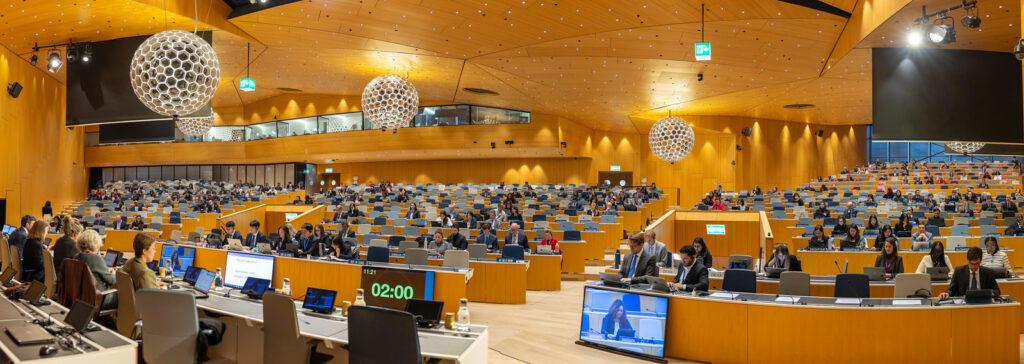
The Centre on Knowledge Governance recently hosted a webinar to prepare delegates and stakeholders for the upcoming World Intellectual Property Organization (WIPO) Standing Committee on Copyright and Related Rights (SCCR) meeting. Attended by over 70 participants—primarily SCCR delegates—the event provided a forum to discuss the advancing global agenda surrounding copyright limitations and exceptions (L&Es). Following a 2012 General Assembly mandate to develop instruments for libraries & archives, museums, research and educational institutions, and people with disabilities, the committee now faces an important juncture. Member states must evaluate three distinct sets of proposals—put forth by the United States, the African Group, and the SCCR Chair—to determine the foundation for future text-based negotiations. Our expert panel provided insights into the content of the various proposals, exploring the historical evolution of international copyright exceptions, evaluating the practical impact of the specific provisions within the current drafts, and examining how these frameworks align with human rights principles, technological advancements like AI, and existing domestic laws. The panel featured: Below is the video of the event followed by a summary of the inputs. A PDF transcript will be provided shortly. Summary of Main Points (with linked headings) Sean Flynn: Contextualizing the Agenda Sean Flynn, Director of the Centre on Knowledge Governance, opened the session by outlining the historical trajectory of the L&E agenda. He noted that the push for minimum standards is not a new phenomenon, with proposals dating back to 2004 and evolving through milestones like the 2013 Marrakesh Treaty. Flynn also highlighted our ongoing preparatory work to inform these negotiations, pointing attendees to newly published empirical studies that demonstrate the positive or neutral market impacts of well-crafted L&Es. Furthermore, he directed participants to our blog for historical timelines, side-by-side document comparisons, and analyses of WIPO’s recent guides on open exceptions and the three-step test. Jonathan Band: Comparative Document Analysis Jonathan Band, Counsel for the Centre on Knowledge Governance, provided a structural comparison of the active proposals currently before the committee, clarifying that the US submitted two formally separate but conceptually overlapping documents covering education and libraries. He explained that all current texts draw upon earlier member submissions and SCCR consolidation charts developed between 2013 and 2017. Band distinguished the practical utility of each framework, noting that the Chair’s text serves primarily as a structural outline, while the US texts offer high-level guiding principles. In contrast, he emphasized that the African Group’s proposal is the most mature text available, offering treaty-like language alongside specific provisions addressing contractual interference and the three-step test. James Love: The Evolution of the Berne Convention James Love of Knowledge Ecology International traced the historical evolution of exceptions within the Berne Convention, which underwent regular revisions up until its final major update in 1971. He detailed how these early iterations adapted to technological changes, progressively expanding access rights for quotation, public affairs, and teaching. Love explained that the three-step test was only introduced in 1967 as a counterbalance to the newly recognized reproduction right, and was not originally intended to restrict the specific exceptions already codified in the agreement. He argued that WTO jurisprudence supports the view that specific Berne exceptions stand on their own merits and are not subjected to the overarching shadow of the three-step test. Faith Majekolagbe: Evaluating the African Group Proposal Professor Faith Majekolagbe of the University of Alberta Faculty of Law offered a review of the African Group’s draft instrument, noting its strategic alignment with the UN Sustainable Development Goals and human rights frameworks. She highlighted that while the proposal seeks binding international obligations, it grants states the flexibility to fulfill these mandates through either general frameworks (like fair use) or specific statutory exceptions. Majekolagbe commended the instrument’s measures to shield lawful L&Es from contractual and technological overreach—an advancement beyond the scope of the Marrakesh Treaty. However, she also identified structural areas requiring improvement, suggesting that the scope of mandatory exceptions for cultural heritage institutions currently omits modern activities, such as e-lending. Christophe Geiger: Human Rights and Authorship Professor Christophe Geiger of Luiss University, Rome, discussed the African Group proposal’s approach to distinguishing between the interests of authors and those of derivative rightsholders—a nuance that is often lost in international copyright lawmaking. He emphasized that researchers and creators primarily seek attribution and broad readership rather than direct economic exploitation of their scientific works. Geiger also recognized the proposal’s grounding in human rights principles and its openness to statutory remuneration models that directly benefit creators. He urged policymakers to utilize existing academic literature, reminding delegates that research has debunked restrictive, step-by-step interpretations of the three-step test. Margaret Chon: AI and Scientific Translation Professor Margaret Chon of Seattle University School of Law presented her ongoing research into how generative AI could be leveraged to overcome language barriers that restrict equitable access to global scientific knowledge. She pointed out a clear disparity: while over 90% of current scientific literature is published in English, fewer than 25% of the global population is proficient in the language, creating a knowledge bottleneck for innovation. Chon argued that existing copyright frameworks, which strictly treat translations as controlled derivative works, fail to incentivize scientific publishers to translate materials for lower-income or minority-language markets. She suggested that modern AI translation tools provide an opportunity to bypass older mechanisms like the 1971 Berne Appendix, provided that international L&Es are updated to legally permit such public-interest uses. Luis Villaroel: Navigating the Three-Step Test Luis Villaroel of Innovarte, Chile, shared his perspective as a former government official, describing the three-step test as a source of complexity that deters developing nations from adopting public interest exceptions due to the fear of trade sanctions. He stressed the difficulty in achieving legal certainty when interpreting the test’s ambiguous standards. Building on the legislative history of the 1967 Berne revisions, Villaroel advocated for the “specialty principle,” asserting that specific exceptions with their own agreed-upon standards must prevail over the general constraints of the three-step test. He recommended amending the African Group proposal to explicitly reject narrow interpretations of exceptions and
Blog, WIPO-SCCR

Analysis of Agenda Items for WIPO SCCR 48

This note provides background information, links to recently published research and analysis, and descriptions of the issues in the agenda for the 48th meeting of the World Intellectual Property Organization’s Standing Committee on Copyright and Related Rights, May 18-22, 2026. To view this document as a PDF for downloading and printing, click here. The Standing Committee on Copyright and Related Rights (SCCR) has long focused on two long-standing agenda items: the Treaty for the Protection of Broadcast Organizations (since 1998) and Limitations and Exceptions for libraries, archives, museums, education, research, and persons with disabilities (since 2004, SCCR/12/3). The SCCR has also been considering various initiatives around copyright in the digital environment since its inception in 1998. Several other matters have been introduced to the agenda over time, including consideration of resale royalty rights for artwork, the rights of theatre directors, and “public lending rights” — which refer to charging libraries for lending public copies of copyrighted works. I. Protection of Broadcast Organizations A. Background B. Current Issues II. Limitations and Exceptions A. Background B. Current issues III. Other matters A. Copyright in the Digital Environment B. Resale Royalty Right C. Rights of Theatre Directors 10 D. Other Studies 10 I.Protection of Broadcast Organizations A. Background The negotiation of the rights of broadcasters was included on the SCCR’s agenda at its founding in 1998. It follows and extends a history of WIPO treaties on broadcasting dating to the Berne Convention’s protection of the rights of authors to their broadcasts in 1928 (Art 11bis), recognition of the rights of broadcast organizations to control uses of wireless broadcasts in the Rome Convention of 1961, and recognition of duties of countries to control unlawful interception of satellite signals by any means in the Brussels Convention Relating to the Distribution of Programme-Carrying Signals Transmitted by Satellite (1974). The Broadcast Treaty is being drafted according to the GA Mandates of 2006 and 2007. The central question for the Broadcasting Treaty, in line with the 2007 General Assembly Mandate, is whether there is sufficient “agreement on objectives, specific scope and object of protection” to warrant a recommendation for a diplomatic conference. (WO/GA/34/16). The 2006 GA mandated that the Broadcasting Treaty be “confined to the protection of broadcasting and cablecasting organizations in the traditional sense” and “based on a signal-based approach” (WO/GA/33/10, para 107, 2006). B. Current Issues The changes in the latest draft are minimal. The SCCR 45 Chair’s Summary described the general zone of consensus on the committee on its objectives, scope, and object of protection: “[w]ith respect to objectives, there is common understanding … that the treaty should be narrowly focused on signal piracy, should not extend to any post-fixation activities and that it should provide member states with flexibility to implement obligations through adequate and effective legal means” and “that the object of protection (subject-matter) of the treaty is related to programme-carrying signals linked to linear transmission”. Some of the provisions in the Chair’s draft appear to extend beyond the bounds of the consensus described in SCCR 45 and in the GA mandates from 2006 and 2007. Some of the major issues include: Are fixation and stored programs rights “signal-based”? The GA mandates require that the Broadcast Treaty follow a “signal based approach.” The Rome Convention uses a “rights-based” approach — i.e., giving broadcasters exclusive rights such as transmission and fixation. The Brussels Convention follows a “signal-based” approach, requiring prevention of signal theft by any regulatory means, without requiring or promoting exclusive rights. There appears to be a consensus on the Committee that, at least in principle, the inclusion of article 10’s flexibility to use other regulatory means combined with some optional exclusive rights (arts. 6-9), in what has been called a “hybrid” approach, can meet the GA requirement that it be “signal-based.” But some countries have opposed articles 7 (fixation) and 8 (stored programs) as being beyond the GA’s mandates.            a. Fixation (Art. 7) Extending the treaty to a right of fixation (Art. 7) essentially means that a user would have to get permission from a broadcaster to make a copy of broadcast content, even if that content was lawfully received (e.g. by a subscriber). That could enable broadcasters to charge subscribers extra for the right to record content, even for uses that copyright law normally permits. For example, a broadcaster may be enabled to demand additional license fees to use private recording devices to enjoy content at a different time or on a different device. Or broadcasters could require licenses to make recordings for any use not included in limitations and exceptions, such as recordings for educational, research, or preservation uses by cultural institutions.           b. Stored Programs (Art. 8) Extending protections to uses of stored programs could enable broadcasters to exclude uses of third-party recording devices and thereby obtain market power for such services. The right to record broadcast material for personal time or device shifting dates to the introduction of video cassette recorders in the 1970s. There are often markets for third party digital recording devices for broadcast material, such as the TIVO device that was popular in the US for many years. Some countries may want to authorize more sophisticated third-party recording, such as the system that was held in the US to violate broadcaster rights in American Broadcasting Cos., Inc. v. Aereo, Inc., 573 U.S. 431 (2014), which ruled that Aereo’s service—which allowed subscribers to view live, over-the-air television broadcasts over the internet—violated copyright laws.      2. Should limitations and exceptions apply to all uses permitted by copyright? Public interest groups have frequently opined that the limitations and exceptions to any broadcasting organization’s right should extend at least to all uses permitted by copyright, for example, by changing the use of “may” to “shall” throughout Article 11. Otherwise, a public interest user may have to clear broadcast rights even for a use permitted by copyright.      3. Are internet streaming companies “traditional” broadcasting? The GA mandates require

WIPO-SCCR

Is the African Group Proposal on L&Es Consistent with EU Law?

At the 47th session of WIPO’s Standing Committee on Copyright and Related Rights (SCCR), the African Group tabled a proposal for an instrument on limitations and exceptions aimed at supporting education, research, cultural heritage, and access for persons with disabilities. For years, discussions at SCCR on limitations and exceptions have been marked by resistance from developed countries to advancing text-based work. This position has started to shift in recent SCCR sessions, with the EU signaling a willingness to engage in discussions on non-binding instruments. However, it remains unclear whether this shift implies a willingness to engage with the African Group proposal. Against this background, we have taken a closer look at how the African Group proposal compares with EU copyright law. Looking at the two frameworks side by side, the gap between them appears smaller than it is often presented. Shifting the focus to the common ground could therefore help make the ongoing discussions at SCCR more constructive. Below is a table with a presentation of the African Group Proposal side-by-side with EU law, organised by topic. A third column summarises the similarities and differences. Expand a topic to see the detailed text. Below the table is further analysis of the areas of convergence and divergence, and a PDF version to download and print. Uses for purposes of education and research Both the African Group proposal and EU copyright law allow Member States to provide for an open-ended exception covering uses for illustration for teaching or scientific research. In this respect, the two approaches are very similar, both recognising that a degree of flexibility is needed to accommodate a wide range of educational and research activities. Beyond this general provision, all key educational and research activities listed in the African Group proposal also find parallels in EU law. EU legislation includes optional exceptions for private copies and quotations, and a range of mandatory exceptions that address key aspects of research and education. These include the text and data mining exceptions, the exception for testing and interoperability of computer programs, the exception for digital teaching activities, and the framework for orphan works. Taken together, these provisions cover a broad spectrum of uses that support research and education, from data analysis and computational research to classroom activities and access to materials. The differences emerge primarily in the conditions attached to these more specific exceptions. EU law often limits them to particular beneficiaries, ties them to non-commercial purposes, or subjects them to additional requirements. The African Group proposal, by contrast, relies on more general standards such as fair practice and purpose-based use. Uses by cultural heritage institutions The comparison in the area of cultural heritage also reveals a strong degree of alignment between the African Group proposal and EU law. Both frameworks recognise the need to enable cultural heritage institutions to preserve works in their collections. The provision in the African Group proposal closely mirrors the corresponding rule in EU law, which allows cultural heritage institutions to make copies of works and other subject matter, in any format, to the extent necessary for preservation. Both frameworks also address access to works held in institutional collections. The African Group proposal allows institutions to provide access to preserved works on their premises, while also permitting the provision of copies for research and study purposes outside their premises. EU law allows cultural heritage institutions to make works available to the public for research and private study through dedicated terminals on their premises. While copies made under the preservation exception cannot as such be used to provide access, access to preserved works may nevertheless be permitted where it independently complies with the conditions of the dedicated terminals exception. In relation to out-of-commerce works, both approaches acknowledge that access should be enabled under certain conditions. The African Group proposal allows uses where suitable licences are not easily available, while the EU framework relies on licensing by collective management organisations, complemented by an exception that applies where such organisations are not sufficiently representative. In practice, the EU system has so far seen limited uptake, with relatively few out-of-commerce works being made available through this mechanism. Other permitted uses The provisions are relatively similar when it comes to access for persons with disabilities. Like the African Group proposal, EU law already allows Member States to provide for an open-ended exception covering uses for the benefit of people with any disability. In both frameworks, the beneficiaries are defined in broad terms and the permitted uses are not exhaustively listed. The main differences lie in the conditions attached to those uses. The African Group proposal requires that the person need the accessible format in order to enjoy the work on an equitable basis with others, while EU law requires that the use be directly related to the disability, non-commercial in nature, and limited to what is required by the specific disability. Cross-border uses are another area where both frameworks build on similar concerns. EU law addresses cross-border situations in three specific contexts: digital teaching activities, the use of out-of-commerce works, and the exchange of accessible format copies under the Marrakesh framework. The African Group proposal takes a broader approach, providing that limitations and exceptions should permit cross-border uses as a general rule, including the circulation of copies made under those exceptions. The picture is different when it comes to remunerated uses. The African Group proposal expressly allows for uses beyond those specifically covered, provided that they are subject to adequate remuneration. EU law, by contrast, only leaves room for additional exceptions in narrowly defined situations of minor importance and subject to strict conditions. Here, the difference between the two approaches is more pronounced, with the proposal offering a broader and more flexible framework than what is currently available under EU law. Additional protections The comparison also shows that both the African Group proposal and EU law recognise the need for safeguards to ensure that limitations and exceptions remain effective in practice, although they approach this issue with different levels of generality. On

WIPO-SCCR

Comparison of Limitations and Exceptions texts for SCCR/48 (Update)

At the most recent meeting of the Standing Committee on Copyright and Related Rights of the World Intellectual Property Organization (SCCR/47),  four documents were presented that could serve as a starting point for text-based work at the next meeting in May 2026 (SCCR/48) in accordance with the Work Program on Exceptions and Limitations (SCCR/43/8 Rev.) adopted by the Committee in 2023: Below is a table that compares these proposals. The two proposals from the United States are combined in a single column; and the African Group Proposal and the Chair’s text each have their own columns. The table demonstrates that there are significant areas of commonality among all four documents; and even more between the Chair’s text and the African Group Proposal. This suggests that further text-based work in the Committee towards an international legal instrument or instruments concerning exceptions and limitations can start with these documents. You can also view, download and print this document as a PDF below:

WIPO-SCCR

SCCR: Background, next meeting and key issues to be considered

STANDING COMMITTEE ON COPYRIGHT AND RELATED RIGHTS (SCCR) Background “The Standing Committee on Copyright and Related Rights (SCCR) was set up in the 1998-1999 biennium to examine substantive law topics in the field of copyright and related rights. The Committee includes all member states of WIPO and/or of the Berne Union; and, as observers, certain member states of the United Nations (UN) that are non-members of WIPO and/or the Berne Union, as well as many intergovernmental and non-governmental organizations”. The Standing Committee on Copyright and Related Rights (SCCR) has traditionally focused on two standing agenda items: the protection of broadcasting organizations and limitations and exceptions. Discussions on broadcasting date back to 1998, while work on limitations and exceptions has been ongoing since 2004, addressing areas such as libraries, archives, museums, education, research, and persons with disabilities. In parallel, discussions on copyright in the digital environment have expanded, including issues related to artificial intelligence and remuneration for online uses.  Other topics, such as artist resale rights and the rights of theatre directors, remain on the agenda but receive limited attention. Next Meeting (Forty-Seventh Session): Date: December 1 to December 5, 2025 Website: https://www.wipo.int/meetings/en/details.jsp?meeting_id=88928 Agenda (SCCR/47/1): Key Issues: References: 

Blog, WIPO, WIPO-SCCR

WIPO SCCR 47 Ends with Some Progress After Another Late Night

The World Intellectual Property Organization’s Standing Committee on Copyright and Related Rights negotiated its conclusions into the early morning hours of December 6 over the conclusions on a packed agenda. The meeting agreed to identify a series of specific articles of the Treaty on the Protection of Broadcast Organizations that lack consensus, to delay until next meeting the decision on how to begin text based negotiations on three proposals for work on an instrument on limitations and exceptions, and to begin work on studies of remuneration of audiovisual authors and on copyright and training of artificial intelligence tools. This note describes the major conclusions and positions of member states at the meeting. Below we also publish an edited transcript of the SCCR 47 public sessions.  Treaty for the Protection of Broadcast Organizations The Chair released a new draft Treaty for the Protection of Broadcasting Organizations with minor changes from the previous draft. After many sessions of the SCCR when it appeared that a conclusion of the broadcast Treaty might be near, this round ended with conclusion that many of the draft treaty’s provisions are far from reaching consensus. The Chair’s summary, in a break with those of the recent past, contained a detailed discussion of divergences that remain: 8. Regarding the first set of articles (articles 1, 9, 12, 13, 14, 16, 17), no concerns were raised about their current wording.  The second set of articles (articles 3, 4, 6, 10) received support in principle, although a few technical adjustments are still required either in the provisions or the explanatory notes.  With respect to the third set of articles, further in-depth discussions are needed in order to overcome the remaining differences, particularly on the topics of (i) rights contained in articles 7, 8 and the respective definitions (article 2), (ii) exceptions and limitations (article 11) and (iii) the functioning of the national treatment and reciprocity principles (article 5 and the interlink between articles 6, 7, 8, 9 and articles 10 and 15).  In plenary statements, the United States and the members of the African Group explicitly opposed moving the current Chair’s draft of the treaty to a diplomatic conference.  The African Group has long supported a narrow broadcast treaty and has repeatedly expressed concerns about potential unintended effects of a broader treaty on public interest uses and on competitive markets. At this SCCR, the Group made its most specific objections to particular provisions of the draft.  The African group stated its support for the conclusions of the Chair’s summary of SCCR 45, “notably that the treaty should be narrowly focused on signal piracy, should not extend to post-fixation activities, should provide Member States with flexibility to implement obligations through adequate and effective legal means and that the object of protection relates to program carrying signals linked to linear transmissions.” It criticized the current draft of the Treaty as veering outside of this zone of consensus. It specifically objected to: The Group identified several questions it requested the facilitators and proponents of the treaty to address, including: The African Group concluded that, “given the lack of consensus on numerous provisions, the African Group is of the view that the present text is not ready for a referral to a Diplomatic Conference.” It further restated its position “that the broadcasting treaty and the instrument on limitation and exceptions should progress together with a view to finalizing both instruments concurrently.” The United States largely repeated concerns about the scope of the draft treaty that it has made in previous SCCR and General Assembly meetings. It expressed disappointment that Articles 7 and 8, on fixation and post-fixation rights over stored programs, were retained in this draft despite its objections to these provisions in earlier meetings.  The EU, the primary demander of the Treaty, expressed some flexibility in confining the draft to conform to concerns raised by other members and recognized that “further technical clarifications are needed” on the present draft. The EU restated its support for a “future proof” treaty in which “retransmission by computer networks of broadcasting organization should be granted meaningful protection.” But it asserted some flexibility on this matter, stating that, “in order to achieve a compromise,” it is “ready to consider” the current option in the text for countries to opt out of covering broadcasting organizations that transmit exclusively via computer networks through a reservation. The EU did not, however, signal support for the narrowing of rights to exclude coverage of stored programs opposed by the United States and the Africa Group. Some other countries, including Russia, Japan, and Canada, noted the minimal changes in the current draft and urged that it progress toward the available consensus that could support a narrower treaty. India specifically called for consideration of “the option of incorporating mandatory limitations and exceptions.”  Brazil asserted that it was ready follow a consensus for the convening of a Diplomatic Conference based on the present draft, but asserted that “in case consensus is not possible by the end of this session, we propose to temporarily remove the topic from the agenda to enable consultations among interested parties, bringing it back to the Committee after sufficient convergence is identified.” Following plenary comments, the discussions of the Treaty moved into informal sessions in which, for the first time in recent memory, observers were not permitted to listen to the deliberations.  Limitations and Exceptions The limitations and exceptions agenda saw the introduction of three new texts. Responding to SCCR 46’s conclusion that the Chair “will prepare a document with concrete suggestions … for the implementation of the Work Program” on limitations and exceptions, the Chair published a Framework of Work Towards an Appropriate International Legal Instrument or Instruments on Limitations and Exceptions. The African Group published a Draft Instrument on Limitations and Exceptions for Libraries, Archives, Museums, Education and Research Institutions and People with Disabilities. The United States, during the SCCR meeting, published Updated Version of the Document “Objectives and Principles for Exceptions and Limitations for Libraries And Archives” and

Blog, Broadcast Treaty, WIPO, WIPO-SCCR

Analysis of Agenda Items for WIPO SCCR 47

This note, which will be presented at the November 25, CKG Workshop on SCCR 47, provides background information, links to recently published research and analysis, and descriptions of the issues that may be addressed in the 47th meeting of the World Intellectual Property Organization’s Standing Committee on Copyright and Related Rights, December 1-5, 2025. It is published as part of the mission of the Centre on Knowledge Governance to produce information and analysis to promote the public interest in multilateral knowledge governance negotiations. The analysis is presented in the order that the items occur on the SCCR 47 Agenda. 

Blog, Broadcast Treaty, Centre News, WIPO GA, WIPO-SCCR

Centre publishes new analysis on broadcast, limitations and exceptions

This week our research team published a series of new reports. These relate to the work streams in the upcoming Standing Committee on Copyright and Related Rights (SCCR) at the World Intellectual Property Organization (WIPO). Analysis of Agenda Items for WIPO SCCR 47by Sean Flynn This note, which will be presented at the November 25, CKG Workshop on SCCR 47, provides background information, links to recently published research and analysis, and descriptions of the issues that may be addressed in the 47th meeting of the World Intellectual Property Organization’s Standing Committee on Copyright and Related Rights, December 1-5, 2025. It is published as part of the mission of the Centre on Knowledge Governance to produce information and analysis to promote the public interest in multilateral knowledge governance negotiations. The analysis is presented in the order that the items occur on the SCCR 47 Agenda.  Tracing a Century of Broadcasting Rights Debates: 1928–2025Luca Schirru and Sean Flynn This report provides a detailed view of developments concerning broadcasting rights within international copyright law, beginning with the 1928 Rome Revision of the Berne Convention and continuing through the latest SCCR discussions. These SCCR sessions illustrate the ongoing effort to create a new international treaty to update protection for traditional broadcasting and cablecasting against signal piracy, while grappling with complex issues like protection over computer networks and the definition of object and scope. Copyright Limitations and Exceptions in the SCCR: A TimelineLuca Schirru, Ben Cashdan and Sean Flynn The timeline details the progression of discussions within the WIPO SCCR regarding Limitations and Exceptions (L&Es) to copyright. This detailed chronology, spanning from 1996 to 2025, highlights the main proposals, studies, and key milestones concerning L&Es for various sectors, including visually impaired persons, libraries, archives, and educational institutions. It documents the formal inclusion of L&Es on the SCCR agenda, the development of numerous draft treaties and working documents, and the ongoing efforts to reach consensus and implement work programs. Comparison of Proposed Texts on Limitations and Exceptions in SCCR 47Jonathan Band Two new documents have been introduced for the Limitations and Exceptions agenda item: the African Group’s “Proposal on Limitations and Exceptions” (SCCR/47/5) and the Chair’s “Text Proposed” (SCCR/47/8), alongside the earlier U.S. proposal “Limitations for Libraries and Archives” (SCCR/44/5). The tables identify common elements among the three documents and additional areas shared by the Chair and African Group texts, suggesting significant areas of commonality and that further text-based work towards an international legal instrument can start with these documents. Justifications for an Instrument on Copyright Limitations and ExceptionsAditya Gupta and Sean Flynn The authors summarise justifications for an international instrument on limitations and exceptions (L&Es) to copyright, and for expanded limitations and exceptions more generally. The justifications are taken from a review of academic literature. Researchers have posited that such an instrument is necessary to counteract the existing “minimum protection approach” of international treaties, which often prioritizes copyright holders over the public interest, access to knowledge, and competition and development concerns. Is the draft Broadcast Treaty consistent with the General Assembly mandate?Sean Flynn WIPO published a new draft of the proposed Broadcasting Organizations Treaty as SCCR/47/3, which does not differ in its main provisions from previous drafts and raises questions about whether it fulfils the mandate of earlier WIPO General Assemblies. The analysis focuses on substantive changes and controversial provisions, addressing whether there is sufficient “agreement on objectives, specific scope and object of protection”. Four new proposals for SCCR 47Ben Cashdan WIPO has published four new proposals on ways forward for key work streams in the SCCR, scheduled for 1–5 December 2025. The proposals concern exclusive rights for broadcasting organisations, disparities in the remuneration of performers, limitations and exceptions to promote education, research and access to knowledge, and ensuring fair copyright royalties for creators in the digital environment.

Blog, Broadcast Treaty, Technical Assistance, WIPO GA, WIPO-SCCR

Tracing a Century of Broadcasting Rights Debates: 1928–2025

This timeline provides a detailed view of the developments concerning broadcasting rights within international copyright law. It begins with the 1928 Rome Revision of the Berne Convention, which initially introduced these rights, and tracks major milestones such as the 1961 Rome Convention and the rise of satellite broadcasting in the mid-1960s. The majority of the timeline focuses on the intensive, multi-year negotiations held under the WIPO Standing Committee on Copyright and Related Rights (SCCR), which formally began addressing the protection of broadcasting organisations in 1998. These SCCR sessions illustrate the ongoing effort to create a new international treaty to update protection for traditional broadcasting and cablecasting against signal piracy, while grappling with complex issues like protection over computer networks and the definition of object and scope. The information concerning the pre-SCCR period (1928–1998) was extracted from Vyas, Lokesh; Schirru, Luca; and Flynn, Sean, The (Long) Road to the Broadcast Treaty: A Brief History (Infojustice, 2025). The remaining sections were prepared based on the documents available on WIPO’s SCCR Meetings webpage (e.g. “Report”, “Conclusions” and “Summary by Chair”) and on Schirru, Luca; Vyas, Lokesh; Jawara, Haddija; Ruthes Gonçalves, Lukas; McGee, Katie; Misto, Yara; and Flynn, Sean Michael Fiil, Documentary History of the Broadcast Treaty in the SCCR (Global Version) (2025), Joint PIJIP/TLS Research Paper Series, 145. See PDF version below. Date Main Developments Short Description 1928 Rome Revision of the Berne Convention Article 11bis introduced broadcasting rights into international copyright law, marking the entry of broadcasting into the global copyright framework. 1948 Brussels Revision of the Berne Convention Added changes and clarifications to Article 11bis. 1961 Rome Convention Adoption of the International Convention for the Protection of Performers, Producers of Phonograms and Broadcasting Organizations (Rome, 1961). The Convention covered only “wireless” transmissions, whether the treaty applied to broadcasts transmitted via satellites 1965 Rise of Satellite Broadcasting With the emergence of orbiting and geostationary satellites, broadcasting organizations began demanding protection against signal piracy (noted by Delia Lipszyc). 1967 Stockholm Revision of the Berne Convention. Introduced further modifications to broadcasting rights but limited protection to live wireless broadcasts. 1968–1969 Intercontinental satellite television broadcasts Global discussions began on the legal challenges of intercontinental satellite television broadcasts. 1971–1974 UNESCO and BIRPI Expert Committees Committee of Governmental Experts (UNESCO & BIRPI) met in: Lausanne (1971); Paris (1972);Nairobi (1973). These meetings laid the foundation for the 1974 Brussels Diplomatic Conference. 1973–1974 Parallel Negotiations Alongside the Brussels Convention, an Intergovernmental Committee under Article 32 of the Rome Convention developed a model law on the protection of performers, producers of phonograms, and broadcasting organizations. 1996 WIPO Internet Treaties During negotiations of the WIPO Copyright Treaty (WCT) and WIPO Performances and Phonograms Treaty (WPPT), there was renewed momentum for a separate treaty on broadcasting, leading to the establishment of the Standing Committee on Copyright and Related Rights (SCCR). 1998 SCCR Agenda The protection of broadcasting organizations was formally added to the agenda of the SCCR, created by the 32nd WIPO Assemblies (March 25–27, 1998). SCCR/1: 1998 Existing legislation on broadcast  Memorandum about the “Existing International, Regional and National Legislation Concerning the Protection of the Rights of Broadcasting Organizations” (SCCR/1/3). SCCR/2: 1999 Multiple submissions on the topic of the rights of broadcasting organizations  Documents on the “Protection of the Rights of Broadcasting Organizations Submissions Received from Member States of WIPO and the European Community” (SCCR/2/5) and “from Non-Governmental Organizations” (SCCR/2/6; SCCR/2/6/REV) and “Addendum Concerning the Submission by the National Association of Commercial Broadcasters in Japan (NAB-Japan)” (SCCR/2/6 ADD.). Submissions by Mexico (SCCR/2/7) and by the United Nations Educational, Scientific and Cultural Organization (UNESCO) (SCCR/2/8) on the “Protection of the Rights of Broadcasting Organizations”. “Report on the Regional Roundtable for Central European and Baltic States on the Protection of the Rights of Broadcasting Organizations and on the Protection of Databases, Held in Vilnius, from April 20 to 22, 1999”,  submitted on behalf of Bosnia and Herzegovina, Bulgaria, Croatia, the Czech Republic,  Hungary, Lithuania, Romania and the Slovak Republic (SCCR/2/10 REV.); “Submission by Cameroon” (SCCR/2/12, presenting the “state of Cameroonian legislation on the protection of broadcasting organizations” and “proposals for the strengthening of the international protection of broadcasting organizations”, pp.2-3).  SCCR/3: 1999 Multiple submissions on the topic of the rights of broadcasting organizations  “Report of the Regional Roundtable for African Countries on the Protection of Databases and on the Protection of the Rights of Broadcasting Organizations, Held in Cotonou, from June 22 to 24, 1999”, submitted on behalf of Benin, Burkina Faso, Cameroon, Ghana, Guinea, Kenya, Malawi,  Mali, Mauritius, Niger, Nigeria, South Africa, Togo and United Republic of Tanzania (SCCR/3/2); Proposal on the “Protection of the Rights of Broadcasting Organization” submitted by Argentina (SCCR/3/4); Proposal on the “Protection of Audiovisual Performances; Protection of the Rights of Broadcasting Organizations”, submitted by  United Republic of Tanzania (SCCR/3/5); “Statement Adopted at the Regional Roundtable for Countries of Asia and the Pacific on the Protection of Databases and on the Protection of the Rights of Broadcasting Organizations, Held in Manila, from June 29 to July 1, 1999”, submitted by Bangladesh, China, Fiji, India, Indonesia, Mongolia, Pakistan, Philippines, Singapore, Sri Lanka, Thailand and Viet Nam (SCCR/3/6). SCCR/4: 2000 Invitation to submit proposals “59. The Standing Committee decided to invite governments to submit […] proposals in treaty language […].” (SCCR/4/6 Report, p.12) SCCR/5: 2001 Different proposals and a comparative table Proposals on the “Protection of Broadcasting Organizations” submitted by Kyrgyzstan (SCCR/5/2), Sudan (SCCR/5/3), and Japan (SCCR/5/4). “Protection of the Rights of Broadcasting Organizations: Comparative Table of Proposals Received by April 30, 2001”, prepared by the Secretariat (SCCR/5/5). “The Standing Committee made the following decision: […]  B. Rights of Broadcasters: (i) the issue would be the main point on the Agenda of the next meeting of the Standing Committee; (ii) the Secretariat would invite the Governments and the European Community to submit additional proposals on this issue, preferably in treaty language[…]” (SCCR/5/6).  SCCR/6: 2001 Multiple submissions on the topic of the rights of broadcasting organizations Proposals on the “Protection of the Rights of Broadcasting Organizations”, submitted by the European Community and its Member States (SCCR/6/2)

Blog, Education, Libraries, Technical Assistance, WIPO GA, WIPO-SCCR

Copyright Limitations and Exceptions in the SCCR: A Timeline

The timeline presented below details the progression of discussions within the WIPO Standing Committee on Copyright and Related Rights (SCCR) regarding Limitations and Exceptions (L&Es) to copyright. This detailed chronology, spanning from 1996 to 2025, highlights the main proposals, studies, and key milestones concerning L&Es for various sectors, including visually impaired persons, libraries, archives, and educational institutions. It documents the formal inclusion of L&Es on the SCCR agenda, the development of numerous draft treaties and working documents, and the ongoing efforts to reach consensus and implement work programs. This document was prepared based on the documents available on WIPO’s SCCR Meetings webpage as compiled in Schirru, Luca; Vyas, Lokesh; Jawara, Haddija; Ruthes Gonçalves, Lukas; and Flynn, Sean, “Documentary History of the Limitations and Exceptions in the SCCR” (2025). Joint PIJIP/TLS Research Paper Series. 148. See PDF version below. Date Main Developments Short Description 1996 WIPO Internet Treaties Agreed Statement to Article 10 of the WCT affirmed that Contracting Parties may “carry forward and appropriately extend into the digital environment limitations and exceptions” and “devise new exceptions and limitations that are appropriate in the digital network environment.” SCCR/1: 1998 Establishment of the SCCR by the General Assembly (GA) decision.  GA decision creating SCCR included a decision that the committee consider, amongst others, the topics of “Copyright, Related Rights, and Digital Technology” “to consider in particular the impact of digital technology and global information networks on copyright and related rights…”, the protection of audiovisual performances, the protection of databases and the protection of broadcasting organizations (SCCR 1/2). SCCR/8: 2002 L&Es as a matter for future review by the SCCR  The item “implementation of the WCT and WPPT, particularly regarding provisions on technological measures of protection and limitations and exceptions” in the document “Short description of possible subjects for future review by the Standing Committee”, provides that “Concerns have been expressed about the possibility that an uncontrolled use of technological measures together with anti-circumvention legislation and contractual practices will allow rights owners to extend their rights far beyond the bounds of the copyright regime, to the detriment of public interest. At the same time, concern has also been expressed that a narrow definition of exceptions and limitations to the protection of technological measures will unduly restrict reasonable access to and use of protected works” (SCCR/8/2, p.6). SCCR/9: 2003 First SCCR study on limitations and exceptions  First SCCR study of the topic of L&Es in the WIPO treaties: “WIPO Study on Limitations and Exceptions of Copyright and Related Rights in the Digital Environment”, prepared by Mr. Sam Ricketson (SCCR/9/7). L&Es are also addressed in the “survey on implementation provisions of the WCT and WPPT”, prepared by the Secretariat (SCCR/9/6, “The following is a brief summary of the legislative provisions contained in the survey. The summary covers the following issues: […] exceptions and limitations”, p.2) SCCR/12: 2004 Proposal to include L&Es and part of the SCCR agenda Chile’s proposal (SCCR 12/3) to “the inclusion for the Twelfth Session of the Standing Committee on Copyright and Related Rights of the subject of exceptions and limitations to copyright and related rights for the purposes of education, libraries and disabled persons, in the current agenda item referring to “other issues for review”, which would become agenda item 4”. SCCR/13: 2005 Proposal on the Analysis of L&Es “Proposal by Chile on the Analysis of L&Es”, suggesting “three areas of work to be undertaken […] 1. Identification […] of national models and practices concerning exceptions and limitations. 2. Analysis of the exceptions and limitations needed to promote creation and innovation and the dissemination of developments stemming therefrom. 3. Establishment of agreement on exceptions and limitations for purposes of public interest that must be envisaged as a minimum in all national legislations for the benefit of the community;  especially to give access to the most vulnerable or socially prioritized sectors” (SCCR/13/5, p.1).  SCCR/14: 2006 Study on Automated Rights Management Systems and L&Es  A study by Mr. Nic Garnett on “Automated Rights Management Systems and Copyright Limitations and Exceptions” (SCCR/14/5).  2007 WIPO Development Agenda Recommendations WIPO Development Agenda Recommendations, which included recommendations 14 and 17 on IP flexibilities;  Rec. 19 access to knowledge and technology to foster creativity and innovation; Rec. 22 L&Es in norm-setting. SCCR/15 SSCR/S2: 2007 Study on L&Es. Proposal by Mexico on L&Es for Broadcasting A study prepared by Judith Sullivan: “Study on Copyright Limitations and Exceptions for the Visually Impaired” (SCCR/15/7). “Proposal by Mexico relating to article 10 ‘Limitations and Exceptions’”, prepared by the Secretariat (adding a paragraph (3) to article 10 on L&ES, SCCR/S2/4) SCCR/16: 2008 L&Es are formally included on the SCCR’s agenda  Proposal by Brazil, Chile, Nicaragua, and Uruguay (SCCR 16/2, p.2) proposing that “that the Committee implement a plan taking into consideration those three levels of activities outlined in Chile’s 2005 submission, with the objective of achieving a consensus on minimum mandatory exceptions and limitations particularly with regard to educational activities, people with disabilities, libraries and archives, as well as exceptions that foster technological innovation.”  SCCR/18: 2009 Presentation of proposal concerning a Treaty Proposed by WBU “Supplementary information on the WIPO studies on Limitations and Exceptions”, prepared by the Secretariat (SCCR/18/2, at SCCR/17, “it was agreed that ‘in order to update and complement the studies, governments are invited to submit to the Secretariat any supplementary information regarding their national law before February 1, 2009’”, p.1). “Draft questionnaire on Limitations and Exceptions” (SCCR/18/3, “the WIPO Secretariat was requested to prepare a draft questionnaire regarding exceptions and limitations, with particular emphasis on the issues regarding education, libraries and disabled persons”, p.2). “Stakeholders’ Platform: Interim Report, prepared by the Secretariat” (SCCR/18/4, “WIPO Secretariat invited various major stakeholders representing copyright rightholders and VIP interests to take part in two meetings with the aim of exploring their concrete needs, concerns, and suggested approaches in order to achieve the goal of facilitating access to works in alternative formats for people with disabilities”, p.2). “Proposal by Brazil, Ecuador and Paraguay, relating to Limitations and Exceptions: Treaty proposed by the World Blind Union (WBU)”, prepared by the Secretariat (SCCR/18/5, presented “as

Scroll to Top